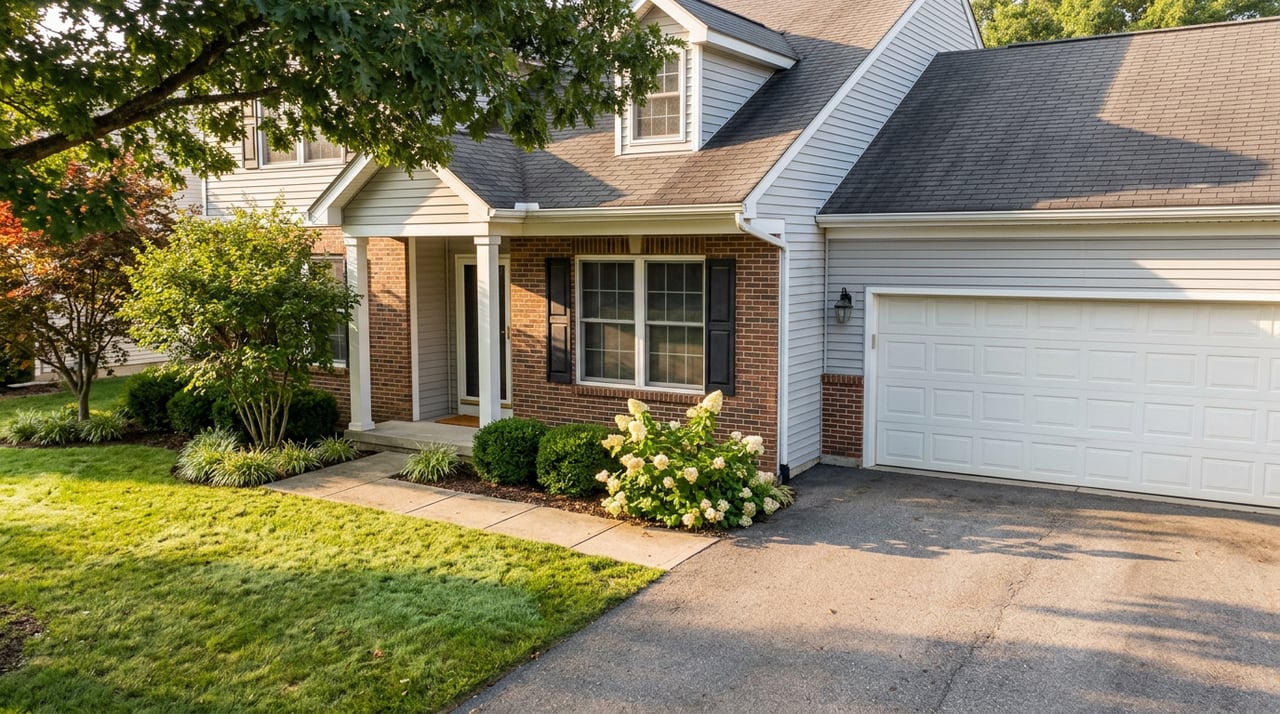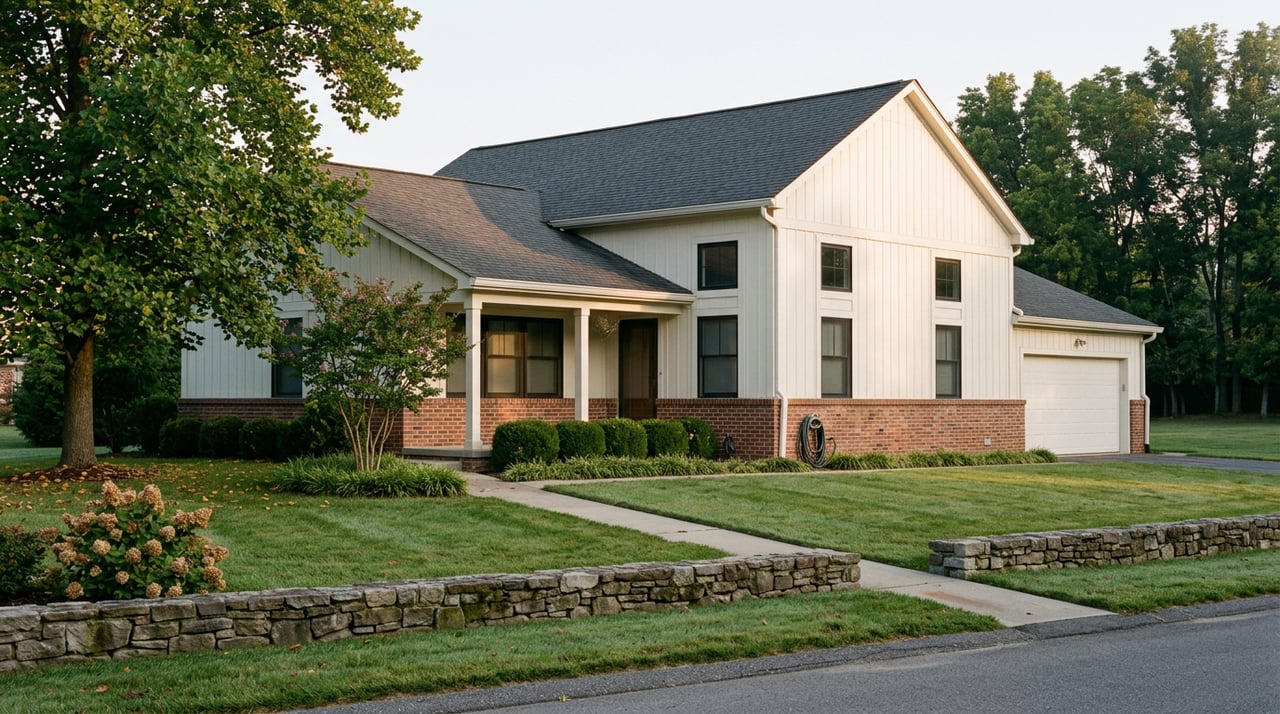
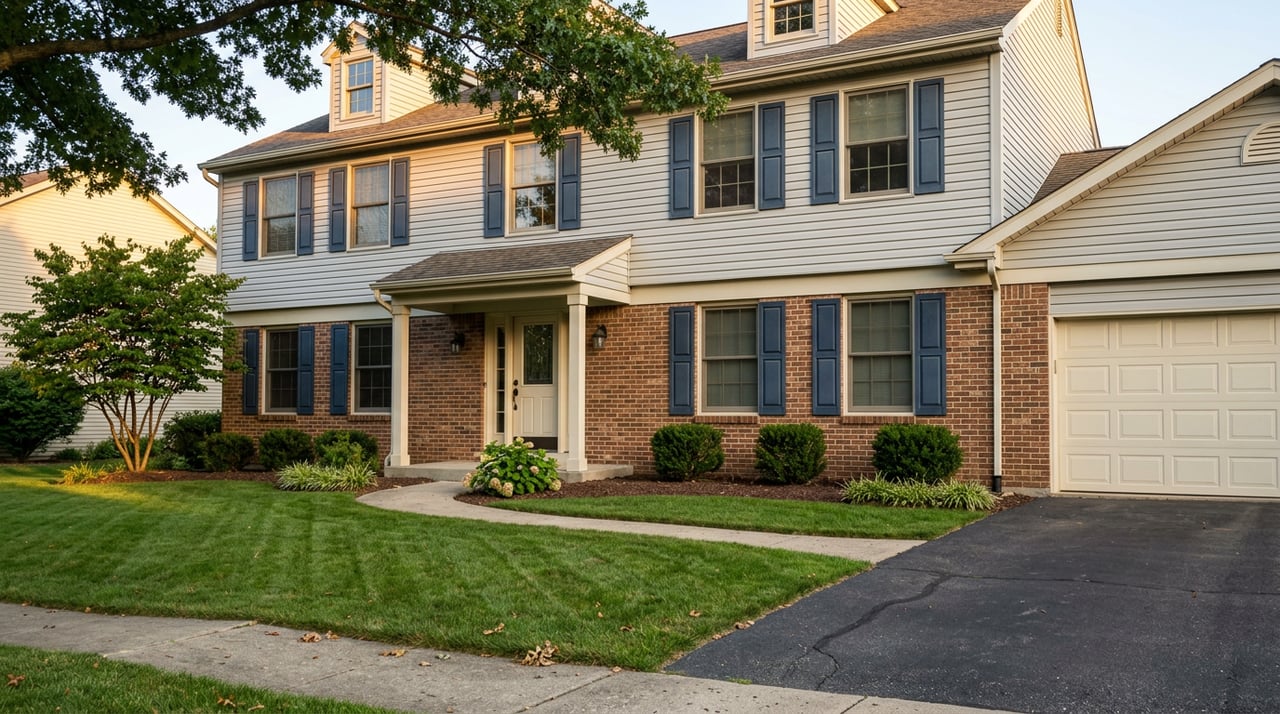
Two buyers tour the same week. One puts an offer on a brick rambler near Old Town Fairfax, a short walk from George Mason University's campus. The other tours a colonial off Route 50, ten minutes away, with a listing agent who also says the address is "in Fairfax." Both buyers assume they're shopping the same market with the same rules. They aren't. One house sits inside the independent City of Fairfax. The other sits in Fairfax County. Different government. Different school division. Different tax rate. And as of this year, the difference in that tax rate runs the opposite direction most relocation guides assume.
That's the friction worth sorting out before you write an offer, not after you're staring at a closing disclosure wondering why your number doesn't match your neighbor's.
One Name, Two Governments
"Fairfax" gets used loosely, and the looseness costs people money. The City of Fairfax is a compact, independent jurisdiction built around Old Town Fairfax and George Mason University, with its own mayor, its own police department, and its own school division. Fairfax County is a much larger surrounding jurisdiction, home to well over a million residents, that stretches out to include McLean, Great Falls, Vienna, Reston, Tysons, Burke, Centreville, Chantilly, and Fairfax Station. Most Fairfax County addresses are served by Fairfax County Public Schools. The City runs its own.
Common ZIP codes like 22030 sit inside or near the City line, but ZIP codes don't map cleanly to jurisdiction boundaries in Virginia. A listing can say "Fairfax" on the sign and sit on either side of a line that determines who taxes you, who plows your street, and which school district registers your kids. The only way to know for certain is to check the parcel, not the marketing copy.
The Tax Assumption That's Backwards Right Now
Here's the part that surprises people who've read a few relocation guides before touring with an agent. The common wisdom repeated across buyer-facing sites is that the small, independent City of Fairfax carries a lower tax rate than the sprawling county around it, the tradeoff being small-town charm at a discount. That's not what the current adopted rates show.
For fiscal year 2026, the City of Fairfax's own city council set its real estate tax rate at $1.150 per $100 of assessed value. Fairfax County's board of supervisors set its FY2026 rate at $1.1225 per $100. The independent city, the one buyers assume is the "quieter, cheaper" option, is currently taxed at a slightly higher rate than the county surrounding it.
| Jurisdiction | FY2026 Real Estate Tax Rate | Approx. Annual Tax on $700K Assessed Home |
|---|---|---|
| City of Fairfax | $1.150 per $100 | ~$8,050 |
| Fairfax County | $1.1225 per $100 | ~$7,858 |
The gap is narrow, a few hundred dollars a year on a typical purchase, not the kind of number that should scare anyone off a neighborhood they love. But it matters because it contradicts the assumption baked into so much relocation content, and buyers who carry that wrong assumption into a budgeting conversation are working from a fictional number. Tax rates are set annually by each government, so this comparison is worth reconfirming at the time you're actually under contract, not borrowed from an old blog post.
Why the County's Median Looks Bigger
The second number that trips people up is the median sale price, and here the intuition runs the other way. Reported sale prices for the City of Fairfax ranged from about $710,000 to $760,000 across March and April 2026, while Fairfax County's median sale price over the three months ending in May 2026 came in around $813,000. On its face, that looks like the county is the pricier place to buy.
It isn't that Fairfax County homes are uniformly more expensive than City of Fairfax homes. It's that the county's median is an average across a jurisdiction that includes McLean, Great Falls, Vienna, and Oakton, some of the highest-priced submarkets in Northern Virginia. Fold those into one number with Centreville and Chantilly and Burke, and the median climbs well above what a comparable house inside the compact City limits sells for. The City of Fairfax, by contrast, is a small, self-contained market. Its median reflects its own inventory, largely 1950s brick ramblers and mid-century homes in neighborhoods like Country Club Hills and Mosby Woods, alongside newer custom construction, without the pull of a McLean estate skewing the number upward.
The practical takeaway for a buyer: don't use the county-wide median as your budget anchor if you're specifically comparing homes near Old Town Fairfax or the GMU campus. You're not competing against Great Falls buyers. You're competing against other buyers looking at the same compact independent city.
The word "Fairfax" describes two governments, two tax rates, and two school systems. The price gap between them isn't a verdict on which one is better. It's an artifact of what got averaged into each number.
What Actually Sits on Each Side of the Line
Inside the City, day-to-day life centers on Old Town Fairfax, a walkable historic downtown with a central plaza that hosts free summer concerts, plus George Mason University anchoring the south end with EagleBank Arena and the Center for the Arts. Van Dyck Park and Historic Blenheim provide open space inside the city limits. The Vienna/Fairfax-GMU Metro station on the Orange Line sits close enough to serve residents on either side of the boundary, so proximity to the Metro isn't a reliable clue to which jurisdiction a house sits in.
Outside the City line, Fairfax County covers a much wider range of settings, from the community-pool suburbs of Burke with their 1970s and 1980s colonials and split-levels, to larger wooded lots near Fairfax Station, to the retail density around Mosaic District and Fair Oaks Mall. None of that is better or worse than what the City offers. It's just a different scale of jurisdiction, with different services funded by a different tax rate and a different set of neighborhoods pulling the median in a different direction.
Schools Split at the Same Line
The tax line and the school line aren't always the same line, which is where relocation research gets genuinely confusing. Fairfax City Schools operate as their own division, separate from Fairfax County Public Schools, even though both serve students who would all describe themselves as living "in Fairfax." A house a few blocks from a City of Fairfax address might feed into Fairfax County Public Schools instead, depending on exactly where the parcel sits.
If school assignment factors into your decision at all, don't rely on a ZIP code or a listing description. Confirm the specific school division and attendance zone for the exact parcel before you get attached to a house.
Before You Write an Offer
A few questions worth asking, regardless of which side of the line you end up on:
- Which jurisdiction, City of Fairfax or Fairfax County, does this specific parcel sit in? Ask for confirmation, not an assumption based on the mailing address.
- What is the current adopted tax rate for that jurisdiction, and has it changed since last year's budget cycle?
- Which school division serves this address, and has that been verified against the official boundary tool rather than a listing description?
- If you're comparing a City of Fairfax home to a Fairfax County home, are you comparing it against the right submarket median, not a blended countywide number that includes McLean or Great Falls?
None of these questions should slow down a strong offer. They just make sure the offer is built on the right set of facts for the specific address, not a generalized idea of what "Fairfax" costs.
A Few Straight Answers
Is Old Town Fairfax inside the City of Fairfax? Yes. Old Town Fairfax and the George Mason University area sit within the independent City of Fairfax, not the surrounding county.
Does a Fairfax mailing address guarantee Fairfax County Public Schools? No. Some Fairfax addresses fall inside the independent City of Fairfax and are served by Fairfax City Schools instead. Always verify by exact address.
Will the tax rate gap between the City and County stay this close? Both governments set their rates annually through separate budget processes, so the gap can move in either direction year to year. Reconfirm current rates when you're actually under contract rather than relying on a prior year's figures.
Sorting out which side of the Fairfax line a house sits on isn't a technicality. It changes your tax bill, your school assignment, and which comparable sales actually apply to your search. If you're weighing a move into this part of Northern Virginia and want someone to walk the specific parcel-level details with you before you fall for a listing photo, Ally Goldwater at At Home With Ally is glad to help you sort out which Fairfax you're actually buying into. Let's connect.