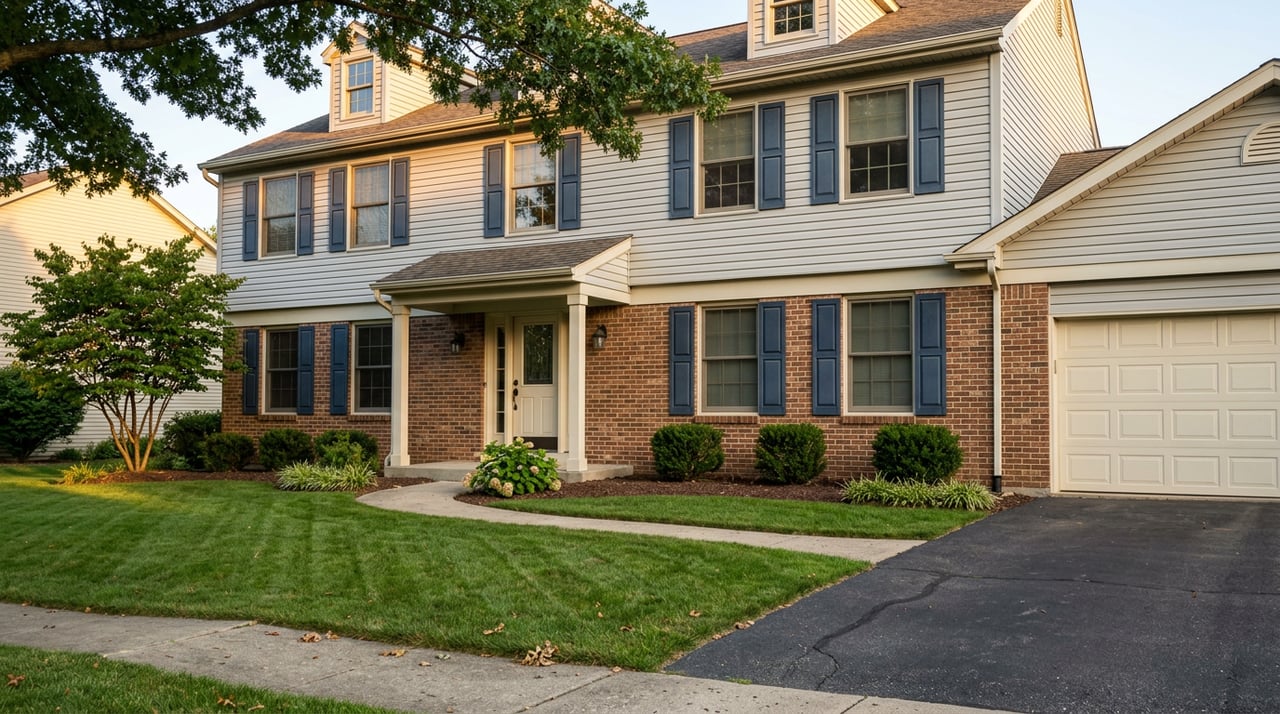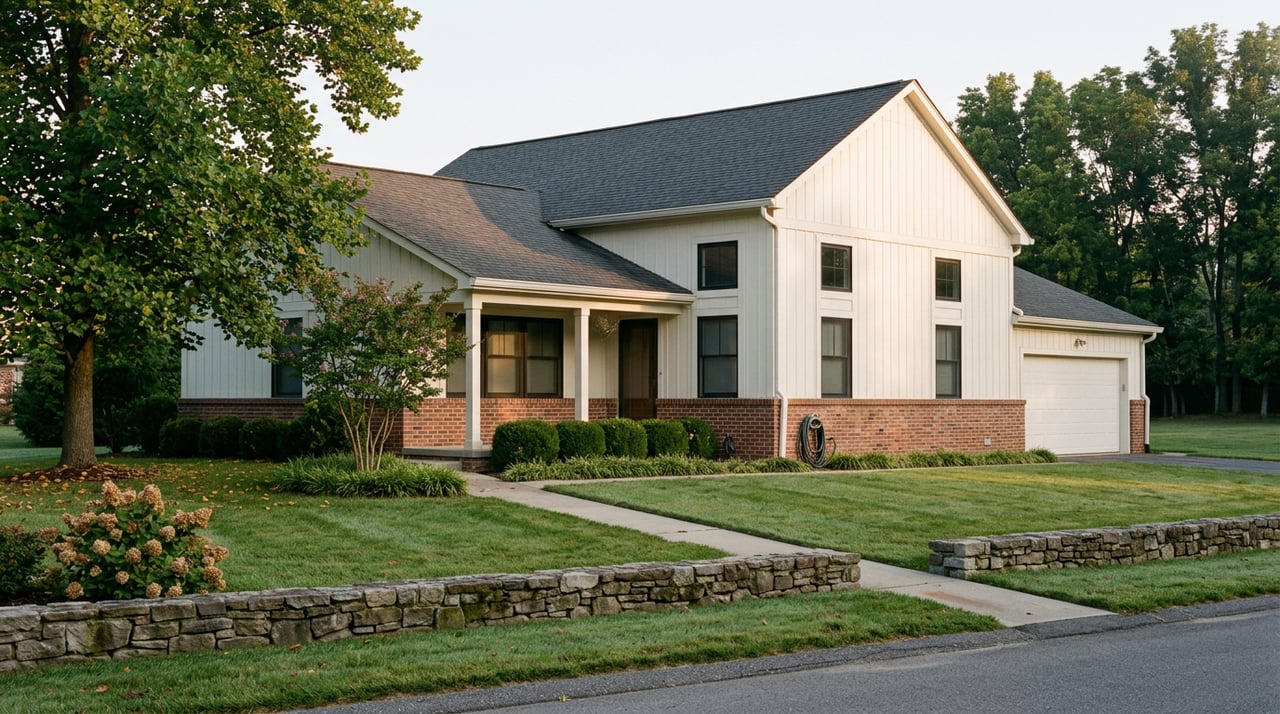
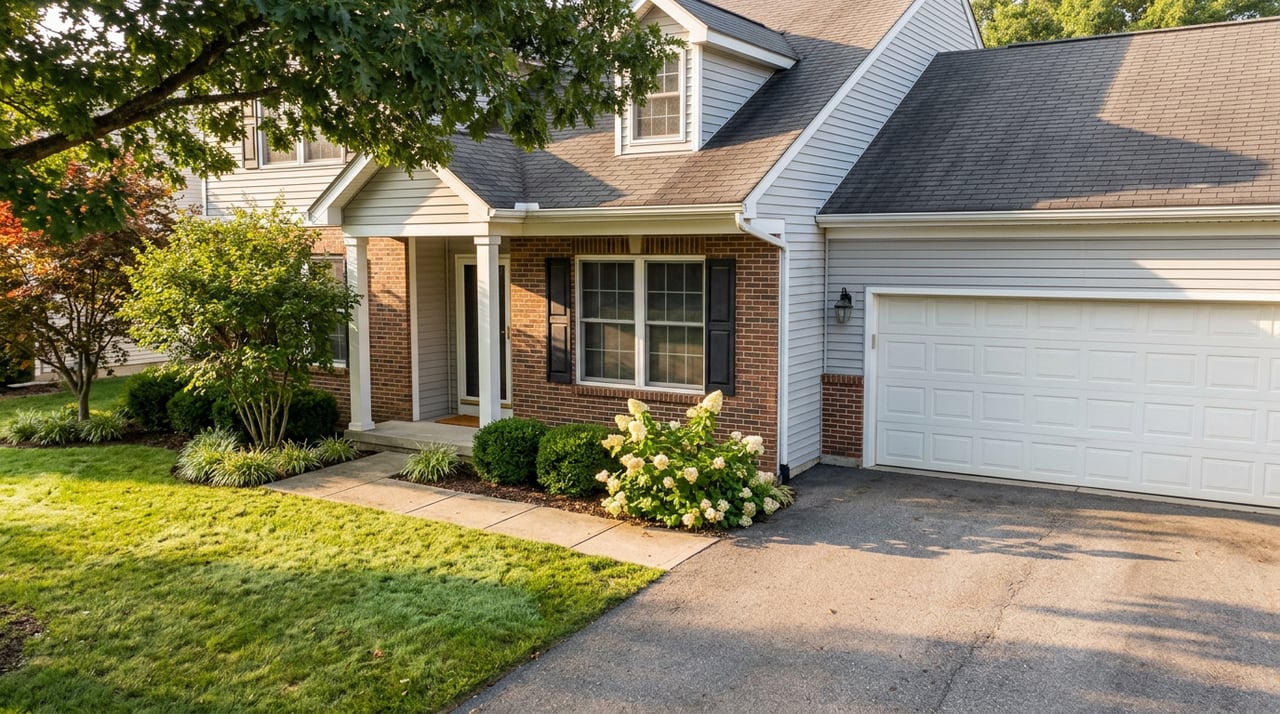
A seller in Old Town Manassas replaces the siding, swaps out the front door, and stages the porch for photos. The house looks sharp. Then a buyer's agent asks a simple question during due diligence: did the city sign off on that work? If the answer is no, the sale doesn't fall apart, but it slows down, because now someone has to go back and get permission after the fact for something that's already been built.
This isn't a rare snag. It's baked into what it means to own a house inside Manassas's historic district, and it shows up in the sales data in a way most sellers never see coming until they're already living it.
The Boundary Nobody Agrees On
Ask three real estate websites where "Old Town Manassas" ends and you'll get three different maps. One portal's neighborhood boundary produces a 12-month median sale price near $495,000 with homes moving in about 25 days. A different site, drawing its own lines around what it calls "Downtown Manassas," shows a three-month median of $502,000 and a much slower pace: a median of 39 days on market as of homes sold through June 2026, up sharply from 11 days over the same window a year earlier.
Both descriptions are technically about the same few blocks of the city. Neither boundary is the one that actually governs what you can do to your house.
The line that matters is the City of Manassas's own Historic Overlay District map, and it doesn't follow anyone's marketing polygon. The city recognizes three separate historic overlay districts, with the Manassas Local Historic District as the largest of the three. If your parcel sits inside that boundary, a state law and a city ordinance both apply to your exterior, regardless of what a listing site calls your neighborhood. If it sits just outside, none of what follows in this article applies to you at all. The only way to know for certain is to check the city's own parcel map before you list, not the neighborhood name a search result assigns your address.
The Committee That Outlives the Closing
Inside that boundary, exterior work doesn't just need a building permit. It needs a Certificate of Appropriateness from the city's Architectural Review Board, a seven-member body that reviews applications for construction, reconstruction, substantial exterior alteration, demolition, or relocation within the district. The list of what triggers a review is longer than most owners expect: fences, sheds, garages, decks, porches, awnings, exterior lighting, replacement siding or windows, commercial signage, and exterior paint all fall under the board's jurisdiction.
This isn't a dormant rule sitting in a code book somewhere. The board meets on the second Tuesday of every month at Manassas City Hall, and its current chair is Marci Settle, with Stephen Hersch serving as vice chair alongside members Myra Buchanan Brent, Sean Porter, Kenneth Jones, and Jan Alten. Its April 2026 agenda alone included staff signing off administratively on a replaced roof at 8828 Center Street, an additional railing added to the roof of the Candy Factory, and a full board review of an application from a local church to replace its historic shingle roof with new shingles in Pewter Gray and add a solar attic fan, submitted by applicant Robert Zimmerman. These are real, dated, publicly recorded decisions, not hypothetical examples.
What that means practically: if you're timing a listing around a repair, the board's calendar becomes part of your calendar. Agendas post the Tuesday before each meeting. Minutes are approved at the following one. Miss the window for this month's meeting and you're not waiting a few days, you're waiting until next month.
What Actually Needs Sign-Off
Not every project inside the district requires the board's attention, and knowing the split saves a lot of confusion during a sale.
- Interior renovations, paint colors, and cosmetic updates that don't touch the exterior generally don't require a Certificate of Appropriateness.
- Substantial exterior work, including new siding, window replacement, fences, sheds, decks, porches, and signage, generally does.
- The board's review is guided by the city's Historic District Design Guidelines, which are built on the Secretary of the Interior's Standards for the Treatment of Historic Properties, not the individual taste of whoever happens to be on the board that month.
A seller who assumes "it's just paint" or "it's just a shed" is inside safe territory should confirm that assumption in writing before pulling permits, not after a buyer's attorney asks for the paperwork.
The Reclassification Most Owners Never Hear About
There's a lesser-known path available to owners who feel boxed in by the rules attached to their specific structure. Properties inside the historic district are formally designated either "Contributing," meaning the structure is considered part of what makes the district historic, or "Non-Contributing," meaning it isn't. That designation isn't permanent. A property owner on Center Street recently petitioned to have a structure at 9019-9021 Center Street reclassified from Contributing to Non-Contributing, a request that moves through the Architectural Review Board first, then the Planning Commission for a public hearing, and finally City Council for a final vote.
For a buyer eyeing a fixer-upper with big renovation plans, this is worth understanding before making an offer. A Contributing designation means future exterior work stays under close board scrutiny indefinitely. A successful reclassification changes that. It's a real option, but it's a multi-body public process, not a form you file and forget.
What This Costs in Time, Not Just Price
Here's where the market data actually answers the question sellers care about most: does any of this show up in how long a house sits.
Across the city as a whole, the last twelve months of closed sales through mid-July 2026 tell a fast-moving story: 1,491 closings, a median sold price of $551,135, down 1.6 percent from the prior year's $560,000, with the typical home selling in a median of 11 days.
The historic downtown pocket tells a different story over the same stretch of 2026. The three-month median sold price there ran higher year over year, up 11.6 percent to $502,000, but the pace slowed dramatically: a median of 39 days on market, compared to just 11 days the year before in that same specific submarket.
Read those two numbers side by side and a pattern emerges that price alone doesn't explain. The historic core isn't losing value. It's taking more than three times longer to close than it did a year earlier, and more than three times longer than the rest of the city is taking right now. Older housing stock always adds some friction of its own, from financing quirks to inspection findings. But a neighborhood where every fence, every window, and every shed change runs through a monthly board meeting is also a neighborhood where "we'll just fix that during due diligence" isn't a same-week fix. That timeline gap is consistent with exactly the kind of friction a Certificate of Appropriateness process creates.
Before You List: A Short Checklist
If you own a home inside the Manassas Historic Overlay District and you're getting ready to sell, a few steps up front save real time later.
- Confirm your parcel is actually inside the Historic Overlay District boundary using the city's own map, not a real estate site's neighborhood label.
- Pull together any Certificates of Appropriateness already issued for past exterior work on the house, so they're ready for your seller disclosure packet.
- Build the board's second-Tuesday meeting schedule into any pre-listing repair timeline, especially for siding, roofing, windows, or fencing.
- Understand that a Certificate of Appropriateness is generally tied to a specific approved project, not a blanket pass for the property going forward.
None of this is a reason to avoid buying or selling a historic home in Manassas. Some of the city's most distinctive properties, the kind buyers specifically seek out, sit inside this boundary. It's a reason to walk into the transaction knowing which calendar you're actually working against.
Quick Answers Before You List
Does owning a historic home in Manassas mean I need city approval to repaint the inside of my house? No. The Architectural Review Board's jurisdiction is exterior work. Interior changes fall outside its review.
What if a previous owner replaced the windows or added a fence without ever getting a Certificate of Appropriateness? That gap becomes a disclosure and negotiation issue during a sale, since a buyer's attorney or agent may flag unpermitted exterior work found during due diligence. Sorting it out before listing, rather than during a buyer's inspection period, keeps the timeline in your control.
How often does the board actually meet? Regular meetings are held the second Tuesday of each month at Manassas City Hall, with special meetings possible on shorter notice when the board calls one.
Selling or buying a historic home in Manassas rewards the person who does the homework early. If you're weighing a listing inside the district, or looking at a Center Street fixer with renovation plans of your own, a conversation before you list beats a surprise during escrow. At Home With Ally has walked Northern Virginia sellers through exactly this kind of paperwork before. Let's connect.