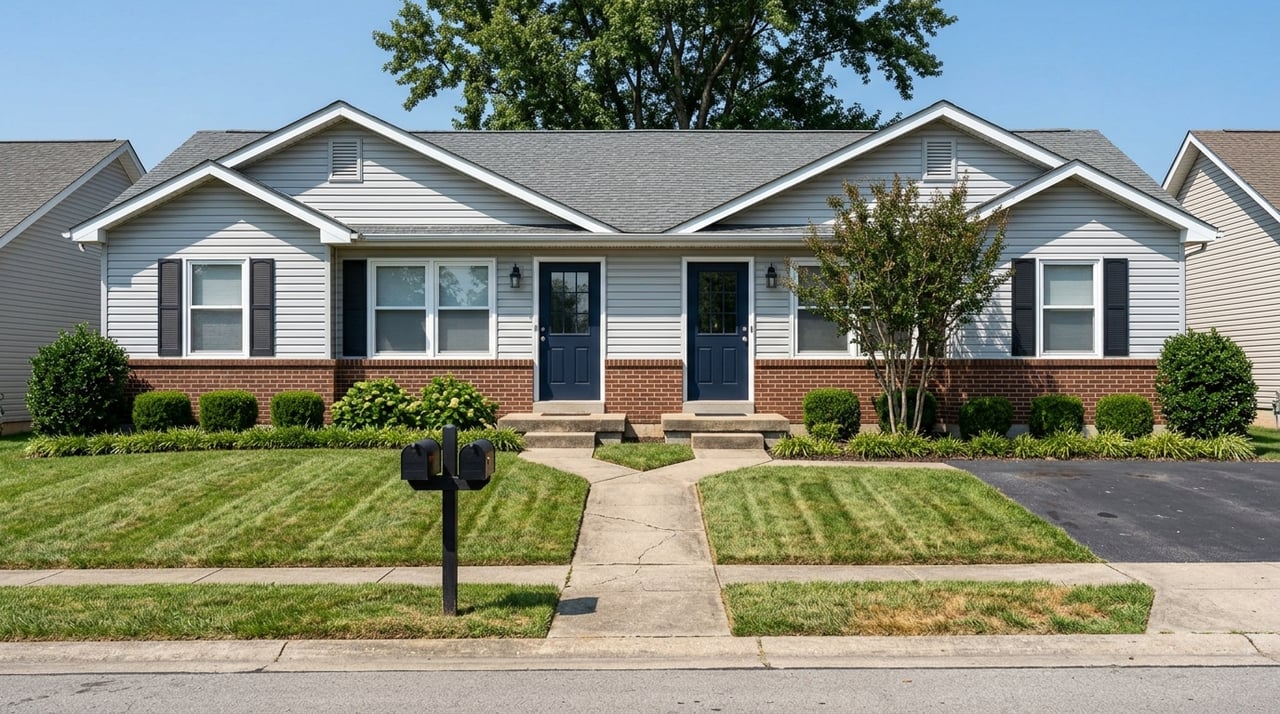
Thinking about buying a rental or small multifamily property in Fredericksburg? You are not alone. With a renter-heavy housing mix, steady commuter activity, and demand drivers tied to major employers, Fredericksburg can look appealing to investors who want income potential without jumping straight into a large apartment asset. The key is knowing how to read the numbers, budget for local costs, and avoid common mistakes before you buy. Let’s dive in.
Why Fredericksburg attracts investors
Fredericksburg sits along the I-95 corridor roughly halfway between Washington, D.C., and Richmond, which gives it a practical location advantage for both commuters and local workers. According to city workforce materials, Fredericksburg also sees net in-migration of 11,936 commuters coming into the city for work.
Demand is also supported by established local institutions. The same city materials identify the University of Mary Washington as the largest employer and Mary Washington Hospital as the second largest employer, with UMW enrollment above 5,000 students. Those are meaningful signals if you are evaluating long-term rental demand.
The city is also relatively compact. Fredericksburg covers just 10.4 square miles, and parts of the city include a large Historic District, which can limit supply in some areas, especially downtown. In practical terms, that means available inventory may stay tighter than in more sprawling suburban markets.
What the renter profile tells you
If you are trying to gauge whether rental demand is deep enough, the household data is a good starting point. U.S. Census QuickFacts shows a 2024 population estimate of 29,992, with 11,720 households and a 39.7% owner-occupied rate. That implies roughly 60% renter occupancy, which is a strong signal for landlords.
The same source reports a median household income of $86,071 and a median gross rent of $1,619. Median monthly owner costs with a mortgage are listed at $2,367, which is notably higher than the median gross rent. For some households, renting may remain the more flexible option, and that can help support demand for well-located units.
Home values are also worth watching. Census reports a median owner-occupied home value of $483,700 in Fredericksburg, above Virginia’s statewide median. For investors, that can mean purchase prices require careful underwriting, especially if you are comparing a duplex, triplex, or fourplex against single-family alternatives.
Start with realistic rent benchmarks
One of the easiest mistakes investors make is underwriting from the highest asking rents they can find online. In Fredericksburg, a better approach is to start with the citywide baseline, then compare that number against current listings and property-specific comps.
The best baseline in this case is the Census median gross rent of $1,619. That gives you a broad city-level anchor. From there, you can check current asking rents to see how unit type and condition may shift your estimate.
According to Apartments.com local rent data, April 2026 asking rents were approximately:
- $1,711 for a one-bedroom apartment
- $1,984 for a two-bedroom apartment
- $2,385 for a three-bedroom apartment
- $2,378 for townhomes
- $2,621 for houses
This range matters because many small multifamily properties compete with more than just other duplexes or fourplexes. Your unit may also compete with apartments, townhomes, and smaller single-family rentals depending on location, updates, parking, and layout.
Vacancy assumptions: use local data, then stress-test
A property can look great on paper if you assume every unit is always full. Real life rarely works that way. Even in a healthy market, you need to budget for vacancy, turnover, and occasional nonpayment.
The local anchor here is encouraging. In the city’s April 2024 reassessment presentation, multifamily vacancy was reported at 3.7%, with a three-year trailing average around 4%. That suggests relatively tight conditions in the multifamily market.
Still, conservative underwriting matters. A smart pro forma should test higher vacancy scenarios than the current snapshot. The same article framework is supported by a broader backstop, since Census reported a national rental vacancy rate of 7.2% in Q4 2025. You do not need to underwrite every Fredericksburg deal at that level, but it is a useful stress-test if you want a more cautious model.
A simple underwriting framework
If you are new to rental analysis, keep your first pass simple. Start with gross scheduled rent, then subtract vacancy and credit loss, operating expenses, and reserves for repairs and turnover.
That basic structure helps you avoid focusing only on the mortgage payment. In Fredericksburg, the local numbers can make a property feel attractive at first glance, but holding costs and maintenance can change the picture quickly.
A practical first-pass checklist includes:
- Estimated monthly rent by unit
- Vacancy and credit loss assumption
- Property taxes and fire tax
- Insurance
- Maintenance and repairs
- Turnover costs and reserves
- Landlord licensing costs
- Utilities, if owner-paid
- Property management, if applicable
Fredericksburg holding costs to know
Property taxes are one of the biggest recurring costs to verify before you write an offer. The City of Fredericksburg real estate tax page lists the rate at $0.80 per $100 of assessed value, plus a $0.01 fire tax per $100. Using the city’s median owner-occupied value of $483,700, that works out to about $3,918 annually.
Assessments also matter over time. The city notes that the tax rate is set annually by City Council, and the next general reassessment is expected July 1, 2028. If you are buying for long-term hold, it is wise to plan for future changes rather than assume today’s tax bill stays flat.
There is also a local licensing requirement. The city’s landlord license page states that any person renting real property in Fredericksburg must obtain a landlord business license. The fee is $25, plus $0.16 per $100 of gross rental receipts over $50,000, and landlords must submit annual tenant lists.
Historic District rules can affect your timeline
If you are targeting an older property or looking for a value-add opportunity near downtown, you need to pay close attention to Historic District rules. This is one of the most important local details for Fredericksburg investors.
According to the city’s Historic District overview, exterior alterations, additions, demolition, new construction, signs, fences, and other visible changes may require a Certificate of Appropriateness from the Architectural Review Board. Routine maintenance typically does not require review, and properties outside the overlay do not need ARB oversight.
That does not mean historic properties are bad investments. It simply means you should budget more carefully for inspections, repair scope, and approval timing. If your strategy depends on moving fast with exterior upgrades, you will want to confirm what is allowed before you close.
There may also be a financial benefit for qualified projects. The city’s rehabilitation tax credit information explains that qualifying residential rehab in the Historic District may be eligible for a tax credit or partial exemption. The catch is important: the application and inspection must happen before work or interior demolition begins.
Small multifamily vs. single-family rentals
In Fredericksburg, small multifamily properties can offer a different risk profile than a single-family rental. With two to four units, one vacancy does not necessarily reduce income to zero. That can help smooth cash flow, especially if your reserves are modest.
At the same time, purchase price, condition, and rent ceiling all matter. Because local asking rents vary across apartments, townhomes, and houses, a small multifamily asset needs to be compared against all nearby rental options, not just other multifamily buildings. A dated duplex with limited parking may not command the same rent as a renovated townhome nearby.
This is why property-specific analysis matters so much. The citywide data helps you set a range, but the actual investment decision depends on unit mix, location, utility setup, renovation needs, and how your property competes in its immediate market.
A practical way to evaluate a Fredericksburg deal
If you are considering a rental or small multifamily purchase, a grounded process will usually protect you better than chasing a headline return. Focus on the local facts first, then build a cushion into your numbers.
Here is a smart starting process:
- Use the citywide median gross rent as a baseline.
- Compare that baseline with current asking rents for similar unit types.
- Underwrite vacancy at the local level, then test a higher scenario.
- Confirm property tax, fire tax, and landlord licensing costs.
- Review age, condition, and likely repair needs.
- Check whether the property falls inside the Historic District overlay.
- Build reserves for turnover, repairs, and longer approval timelines if needed.
That approach may feel conservative, but it gives you a clearer picture of what the property has to do in order to work. It also helps you avoid overpaying based on optimistic rent assumptions.
Final thoughts on investing in Fredericksburg
Fredericksburg offers several fundamentals that can make it worth a serious look for rental and small multifamily buyers. You have a renter-heavy city, notable commuter inflow, established employers, relatively tight multifamily vacancy, and a compact footprint that can limit supply in some submarkets.
At the same time, this is not a market where you want to skip the details. Taxes, licensing, repair reserves, and Historic District rules can all affect your returns. If you want help evaluating whether a Fredericksburg property fits your goals, Ally Goldwater can help you think through the numbers, the property condition, and the local context before you make your next move.
FAQs
What rent should you use when analyzing a Fredericksburg rental property?
- Start with the citywide Census median gross rent of $1,619, then compare it with current asking rents and similar nearby properties by unit type and condition.
What vacancy rate should you assume for a Fredericksburg small multifamily property?
- The city reported 3.7% multifamily vacancy in its April 2024 reassessment presentation, but it is smart to stress-test your deal with a higher vacancy assumption.
What local costs matter most for Fredericksburg landlords?
- Key costs include real estate taxes, the fire tax, landlord business license fees, insurance, maintenance, repairs, turnover reserves, and any compliance costs tied to historic properties.
What should you know about Fredericksburg Historic District properties before investing?
- Some visible exterior changes may require Architectural Review Board approval, and qualifying rehab tax benefits generally require application and inspection before work begins.
Why can Fredericksburg support rental demand?
- Local demand signals include a renter-heavy household mix, commuter inflow, and major employment anchors such as the University of Mary Washington and Mary Washington Hospital.