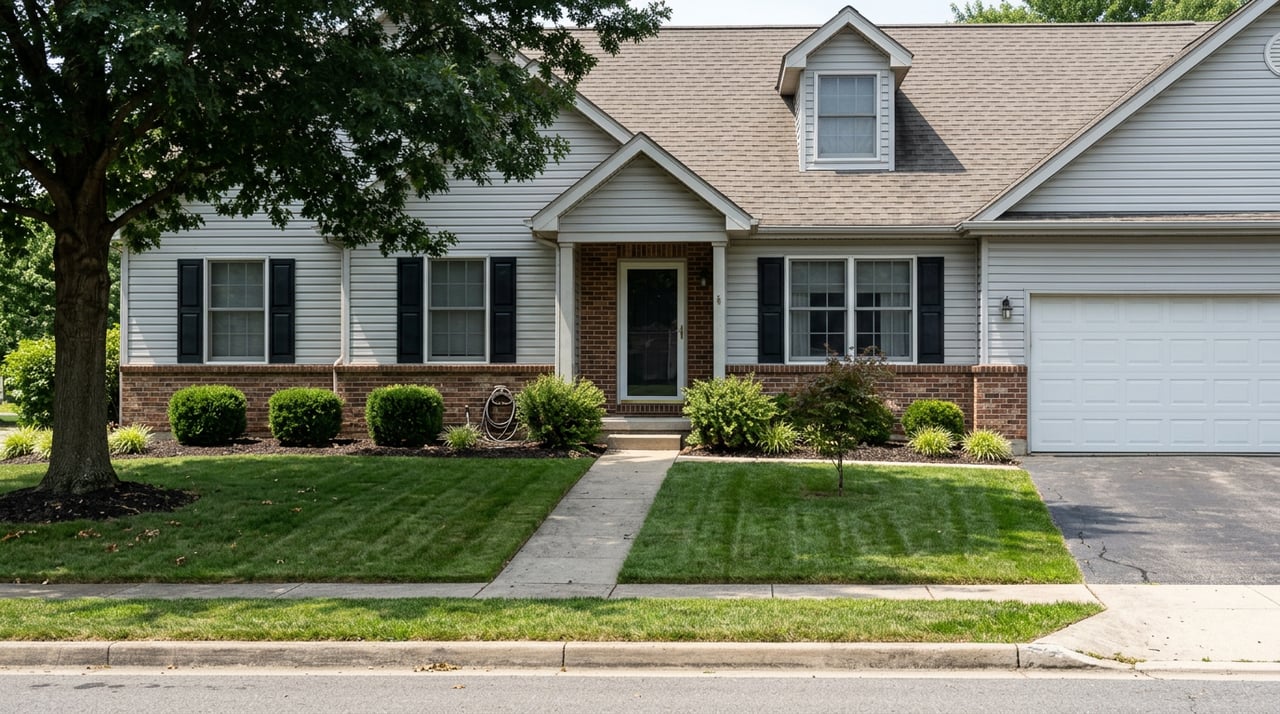
WTOP reported that Prince William County Board Chair Deshundra Jefferson said, "I don't believe that data centers are an answer to all of our problems." The remark came moments before the board voted 8-0 on July 7, 2026, to deny the comprehensive plan amendment that would have opened the door to the Dulles South Innovation Center, a 1,940-acre data center campus proposed along Sanders Lane in the Gainesville District. It was the second large data center proposal in the county to come to an end that week. If you're weighing a purchase in Gainesville right now, both outcomes matter less than what's happening underneath them.
Buyers I talk with tend to ask one question: will a data center hurt my home's value? The research already answers that, and the answer isn't the one most people expect.
Two Proposals, One Week
Start with what actually happened. Days before the Dulles South vote, the long-running Prince William Digital Gateway project near Manassas National Battlefield Park officially died when its developers, QTS Realty Trust and Compass Datacenters, withdrew their appeal to the Virginia Supreme Court after three years of litigation. That project, approved by the county back in 2023, would have covered roughly 2,100 acres and about 22 million square feet.
Then came Dulles South. Also called Dulles Cloud South, the proposal targeted land north of Sudley Road along Sanders Lane, near the Loudoun County line. On paper it was smaller in acreage than Digital Gateway, but it packed nearly double the building, up to 43 million square feet of data center and industrial space, into that footprint. The applicant, Sanders Lane Assemblage I LLC, traces back to LSI 360, a Warrenton-based communications firm. Prince William school board member Erica Tredinnick works there now, and former Gainesville District supervisor Pete Candland, who represented the district from 2012 to 2022, had also been employed by the firm before the project became public.
Even the procedure was contested. When the developer requested a last-minute deferral, Gainesville District Supervisor George Stewart objected, and the board voted 7-1 to deny that request and proceed with the hearing anyway. Stewart, whose district includes the affected land, argued the comprehensive plan's protections for rural character, the Occoquan headwaters, and the area's visual resources made a project of this scale incompatible with what's already zoned there. All eight supervisors agreed. County staff had recommended denial too, citing infrastructure capacity, traffic, and environmental concerns.
Two of the largest data center proposals in county history, dead within the same week. That's the headline. It's not the whole story.
The Home-Value Fear Already Has an Answer
Here's the part that surprises people. A 2025 study out of George Mason University's Schar School, led by Center for Regional Analysis Director Terry Clower and Assistant Director Keith Waters, examined thousands of home sales across Northern Virginia and mapped them against distance from data centers. The finding ran opposite to what most residents assume: home prices were higher the closer they were to a data center, not lower. Waters said in the report that he wasn't particularly surprised by the pattern.
Before you take that as a green light, look at where the priciest homes in the study actually sat: North McLean, Western Loudoun, Clifton and Farrs Corner, and Belle View in Alexandria. These are areas defined by larger lots, bigger houses, and natural draws like Potomac River access or rolling terrain, the same qualities that make land attractive to data center developers in the first place. Proximity to a data center didn't cause the higher prices on its own. Both the data centers and the higher prices are showing up in places that were already desirable before construction started. That distinction matters if you're evaluating a specific Gainesville property: the study is real, but it's describing a correlation built on land quality, not a guarantee that any parcel near a facility will appreciate the same way.
The Real Money Move: What's on Your Tax Bill
While the zoning fights get headlines, the fiscal side is where data centers are actually changing what Gainesville homeowners pay. In its FY2027 budget markup session in April 2026, the Board of County Supervisors set the real estate tax rate at $0.85 per $100 of assessed value, down from $0.906, saving the average homeowner about $145 a year. That cut was paired with a proposed increase to the computer and peripherals tax rate, the levy that falls almost entirely on data center equipment, from $4.15 to $4.50 per $100.
A 2026 report prepared by Mangum Economics for the Northern Virginia Technology Council, an industry trade group with an obvious stake in the outcome, ran the counterfactual: without data center tax revenue, Prince William's residential rate would need to climb from $0.906 to $1.169 per $100, a 29 percent increase, just to maintain current service levels. Treat that figure as directional rather than gospel given who funded it, but it lines up with the budget changes described above: the residential rate went down while the proposed computer and peripherals tax rate went up.
That's the piece that resolves the apparent contradiction. Prince William isn't rejecting data centers wholesale. It's rejecting specific siting proposals in a specific corridor while still counting on the industry's existing tax base to hold down bills for every other homeowner. Both things are true at once.
The Parcel Question Still Open
Supervisors have floated ending the county's data center overlay district entirely, with a follow-up vote expected sometime in the late 2026 to 2027 window. The July denial and the developers' withdrawal from the Digital Gateway appeal ended two specific proposals.
If you're looking at acreage or rural property in the Gainesville magisterial district, especially anything near the Sanders Lane corridor, Catharpin, or the boundary of the old Digital Gateway footprint, county land use records and the comprehensive plan GIS layer show current designations, but they don't show what a future board might vote to change. Even long-standing local businesses have felt this shift: the Merrifield Garden Center location in Gainesville sold to data center interests for $160 million in October 2025, a sign of how differently commercial land economics are running in this corridor compared to a typical residential resale.
A Few Straight Answers
Does living near an existing data center hurt resale value? The GMU research found no evidence of that in Northern Virginia sales data, and in some submarkets prices ran higher closer in, though that's tied to the kind of land those areas already had, not proximity by itself.
Are more data center proposals coming to Gainesville? Likely yes, in some form. The Dulles South rejection and the Digital Gateway developers' withdrawal ended two specific proposals, not the county's overall appetite for the tax revenue the industry generates.
If you're weighing a purchase in Gainesville, whether that's a resale in an established neighborhood or acreage further out toward Catharpin, the headline vote is rarely the one that should drive your decision. I spend a lot of time in county land use records so my clients don't have to guess. If you want a parcel-specific read before you make an offer, Let's connect.
This article is general information, not legal, tax or financial advice. Consult a qualified professional about your situation.